"Togoku no Bugu" Illustrations
A series of illustrations I did for this article: "Tōgoku No Bugu (東国の武具): Study Notes An essay on the gear of a Samurai from the Tōgoku regions during the Tenshō era" about the armors worn by samurai from the Eastern regions of Japan, during the late Sengoku Period.
The article can be read here: https://www.academia.edu/115026184/Tōgoku_No_Bugu_東国の武具
A run down explaining a bit every piece:
The cover: It represents a samurai, clad in a Kantō Go Mai Dō, with a Suji Bachi Kabuto, long hinged sode, plated haidate and a fully enclosed kote. Has a katana and wakizashi at his obi. This is the armor represented in all the illustrations, although with small variations.
On Horseback: The samurai, on horseback, as it was the military doctrine of the eastern regions. The horse is also fully armored, to fulfil a heavy shock cavalry role. The horse armor is made, most of the time, of lacquer hardened buffalo rawhide and metal. The main variations are the helmet, a zunari kabuto, and the sword, this time a tachi.
Front and back, details: It shows a front and back view of a samurai, clad in a Kantō Go Mai Dō, with a Suji Bachi Kabuto, long hinged sode, plated haidate and a fully enclosed kote. No difference with the armor in the cover, but the sword is, again, a tachi.
Kogusoku: This illustration represents the same samurai as the others, but without the main armor, showing the auxiliary armor: kote (arm armor), haidate (upper leg armor), suneate (greaves), and wakibiki (armpit plates)
Front and back b/w: A black and white version for the appendix of the paper
On horseback b/w: A version without the maedate (helmet crest) and the sashimono. Done for the appendix and to show the armor without the decorations

Cover Art
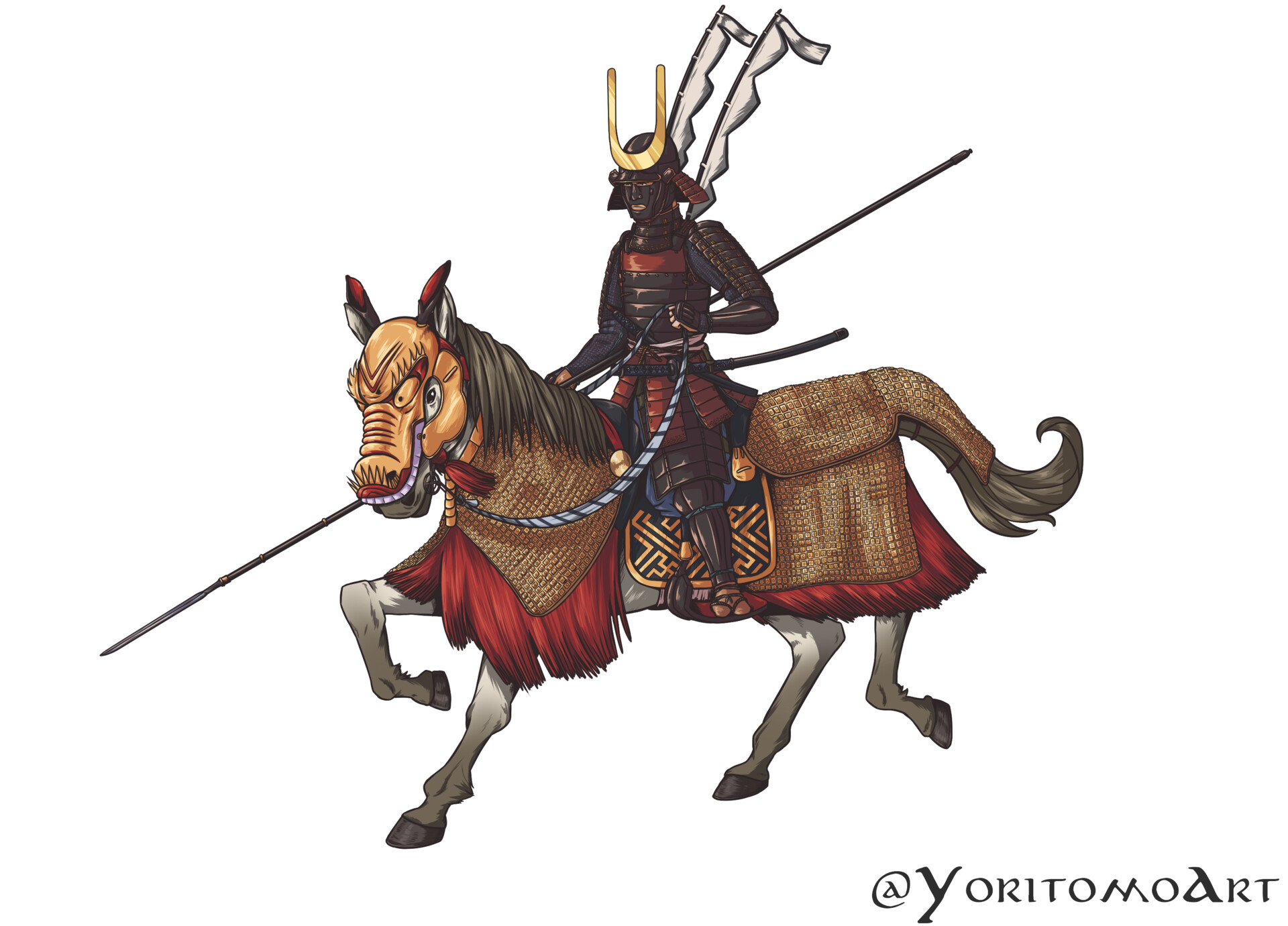
On horseback (maedate and sashimono)

Front and back view (color)

Front detail

Back detail
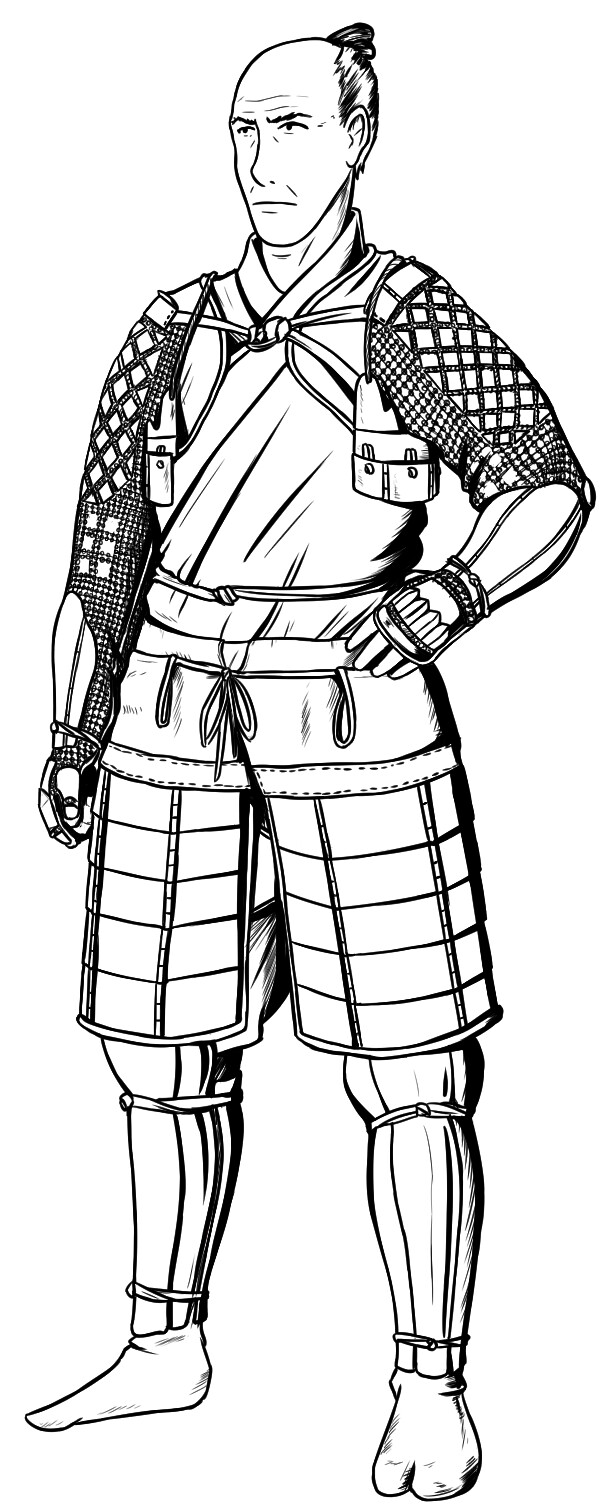
Ko Gusoku (auxiliary armor)

Front and back view (black and white)

On horseback (without the maedate and sashimono)